



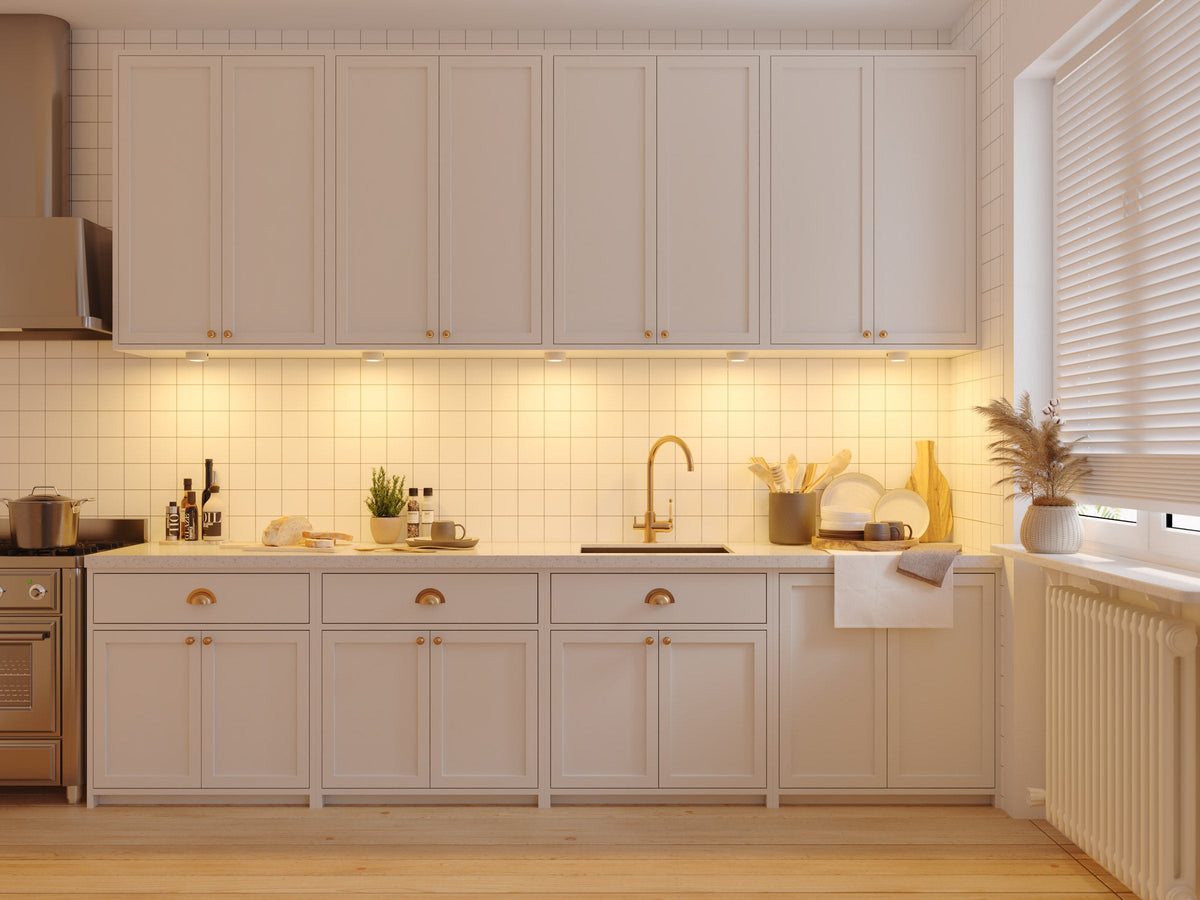
The INLIGHT IN-0107 puck lights link together in a single run, so you can light a whole row of cabinets from one plug. The only thing to plan is the mix of puck types. Get it right once and ordering is simple.
Single-wire vs. double-wire pucks
- Double-wire puck: one cord in, one cord out. Power passes through it to the next puck.
- Single-wire puck: one cord in, nothing out. It is the end of the run.
A complete run needs just one single-wire puck, at the end. Every other puck is double-wire.
What comes in each option
| Option | What's inside |
|---|---|
| 1-puck light kit | 1 single-wire puck + 1 plug |
| 1-puck add-on light | 1 double-wire puck |
| 3-puck light kit | 1 single-wire puck + 2 double-wire pucks (plug included) |
The simple rule
For any number of pucks, you need 1 single-wire puck and all the rest double-wire. Start with a kit, since that is where the single-wire end puck and the plug come from, then fill in with add-ons.
| Pucks you want | What to order |
|---|---|
| 1 | 1-puck light kit |
| 2 | 1-puck light kit + 1 add-on |
| 3 | 3-puck light kit |
| 3 or more | 3-puck light kit + (total − 3) add-ons |
Example: 7 puck lights in a kitchen
Seven pucks means 1 single-wire puck and 6 double-wire pucks.
- One 3-puck light kit gives you the plug, the single-wire end puck and 2 double-wire pucks.
- Four 1-puck add-on lights give you the other 4 double-wire pucks.
Total: 1 single-wire + 6 double-wire = 7 pucks.

Tips for planning your run
- Measure your cabinet run and space the pucks evenly before you order.
- Put the single-wire puck at the far end, away from the outlet.
- Check the included instructions for the maximum number of linked pucks.
Share:
Using a Wall Dimmer with IN-0102 Puck Lights